Understanding the Importance of industrielle Notdusche
In industries where hazardous materials are handled, the importance of safety equipment cannot be overstated. An industrielle Notdusche is a critical component in emergency response strategies. This specialized equipment is designed to provide immediate decontamination for individuals exposed to harmful substances, significantly reducing the risk of severe injuries or long-term health consequences. Understanding the value of an industrial safety shower is essential for compliance with safety regulations and the protection of personnel in laboratories and manufacturing environments.
What is an industrielle Notdusche?
An industrielle Notdusche, commonly referred to as an emergency shower, is a safety device intended to wash off hazardous materials from a person's body in emergency situations. These showers are typically installed in laboratories, chemical processing plants, and manufacturing facilities where employees may be exposed to hazardous chemicals or materials. The showers are designed to deliver a continuous flow of water, usually at a specified temperature, to effectively rinse away contaminants.
Benefits of implementing safety showers in labs
Implementing safety showers in laboratories and industrial settings offers several advantages:
- Rapid response: In the event of chemical exposure, immediate access to a safety shower can prevent serious injuries and mitigate long-term health effects.
- Compliance with regulations: Safety showers are mandated by various safety and health regulations, ensuring facilities can meet legal and industry requirements.
- Enhanced worker confidence: Knowing that safety measures are in place boosts employee morale and confidence, leading to a safer workplace culture.
- Cost-effective measures: Investing in emergency showers can significantly reduce potential medical costs associated with chemical exposures and employee compensation claims.
Key safety regulations and compliance standards
Compliance with safety regulations is crucial for maintaining workplace safety standards. Various organizations, including ANSI (American National Standards Institute) and EN (European Norms), set forth guidelines regarding the installation and maintenance of emergency safety showers. These standards dictate aspects such as:
- Flow rates: Emergency showers must provide a minimum flow rate, typically 20 gallons per minute (approximately 75 liters per minute), to ensure effective decontamination.
- Water temperature: The water supplied should be tepid, ideally between 60°F and 100°F (15°C to 38°C), to reduce the risk of thermal shock during use.
- Accessibility: The showers must be easily accessible within 10 seconds of a potential hazard, ensuring they are located close to areas where chemicals are used.
Types of industrielle Notduschen Available
Different models for various industrial environments
Different industrial environments may require specific types of safety showers, each offering unique features to meet the needs of the setting:
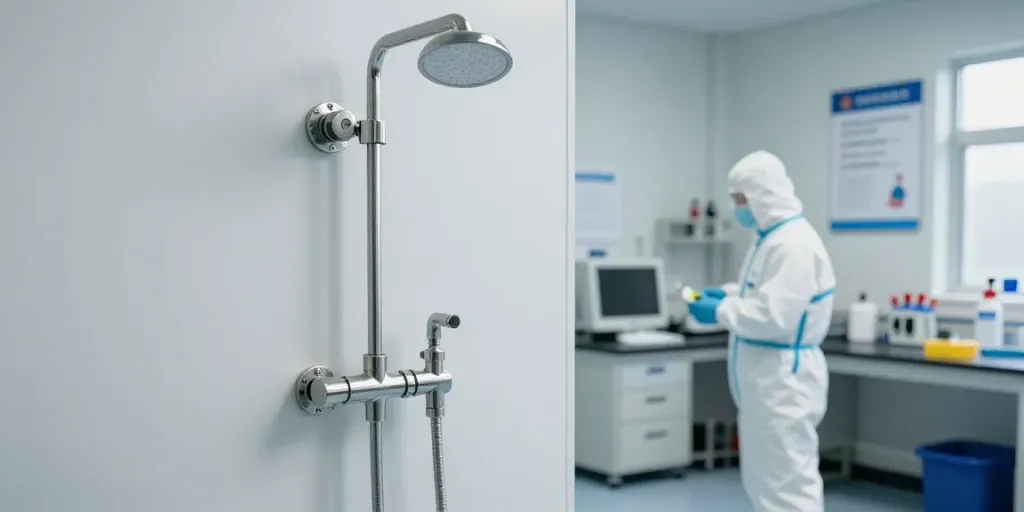
- Wall-mounted showers: Ideal for spaces where floor space is limited, these showers are affixed to walls and provide an effective solution for emergency decontamination.
- Freestanding showers: Commonly found in larger industrial settings, freestanding showers offer flexibility in placement and are often equipped with additional features such as eye wash stations.
- Portable showers: These are used in temporary work sites or during field operations, providing mobility and convenience where fixed installations are not feasible.
- Combination units: Combining emergency showers with eye wash stations, these units provide comprehensive decontamination solutions for a wide array of potential hazards.
Customizable options for specific needs
Many manufacturers offer customizable options for industrial safety showers to ensure they meet specific environmental and operational needs. These include:
- Specialized materials: Showers can be made from materials such as stainless steel or plastic that resist corrosion, especially in harsh environments.
- Temperature control systems: In facilities with extreme temperatures, specialized heating or cooling systems can be installed to maintain the water temperature within safe limits.
- Support systems: Showers can be equipped with additional systems like acoustic alarms that activate in the event of use, alerting nearby personnel and ensuring immediate assistance.
Comparison with eye wash stations
While both emergency showers and eye wash stations are essential for laboratory safety, they serve different purposes:
- Emergency showers are designed to rinse off contaminants from the entire body, while eye wash stations specifically target the eyes, providing a focused flow of water to flush out irritants.
- Both pieces of equipment must adhere to safety standards, but they have different flow rate requirements and installation guidelines.
- Emergency showers typically require a higher water flow and larger drainage systems compared to eye wash stations.
Installation and Maintenance of Notduschen
Best practices for proper installation
Installing industrial safety showers requires adherence to strict guidelines to ensure their effective operation. Best practices include:
- Location: Showers should be installed within 10 seconds of any hazardous material work area.
- Accessibility: Ensure clear paths to the shower, free from obstructions.
- Drainage solutions: Proper drainage must be installed to prevent water accumulation and slippery floors during emergencies.
- Visibility: Shower units should be clearly marked and easy to locate in low-light conditions.
Regular maintenance and inspection schedules
To ensure safety showers remain functional, a routine maintenance schedule should be established:
- Monthly inspections: Check for blockages, flow rates, and general wear and tear.
- Annual testing: Conduct thorough testing of the shower’s water pressure and temperature to ensure compliance with safety standards.
- Record keeping: Maintain logs of inspections and maintenance activities to provide documentation for compliance audits.
Common issues and troubleshooting tips
Despite regular maintenance, issues can arise with safety showers. Common problems include:
- Insufficient water flow: Check for blockages in the supply line or valve issues if the water flow is less than specified.
- Temperature fluctuations: Inspect heating or cooling systems for malfunctions if water temperature does not meet safety requirements.
- Corrosion or rust: Regularly inspect the unit for signs of corrosion, especially in chemical environments, and replace damaged components promptly.
Choosing the Right industrielle Notdusche
Factors to consider based on environment
Selecting the appropriate industrial safety shower requires consideration of several factors:
- Type of hazards: Identify the primary hazards present in the workplace to determine the necessary features of the safety shower.
- Occupancy levels: High-occupancy areas may require multiple showers to ensure all personnel can access emergency decontamination quickly.
- Industrial standards: Ensure chosen models comply with relevant industry standards and local regulations.
Acoustic alarms and additional safety features
Modern safety showers often come with various features that enhance safety:
- Acoustic alarms: These alarms can alert others in the area during an emergency, ensuring support is provided promptly.
- Emergency lighting: Lighted signs can help guide personnel to safety showers in low-visibility conditions.
- Integrated eye wash features: Such features provide a comprehensive emergency response solution in a single unit.
Real-world case studies of effective installations
Many industries have successfully implemented effective safety shower solutions:
- Case Study 1: A chemical processing plant reported a significant reduction in injury rates after installing multiple freestanding safety showers equipped with eye wash stations.
- Case Study 2: A laboratory transitioned to stainless steel emergency showers, leading to fewer maintenance needs and enhanced safety compliance.
Future Trends in Safety Equipment for 2026
Emerging technologies in safety showers
The future of industrial safety showers is promising, with innovations that include:
- Smart technology: Integration of IoT (Internet of Things) features to monitor shower functionality and alert maintenance crews if problems arise.
- Eco-friendly designs: Showers designed to conserve water while maintaining necessary flow rates are becoming increasingly popular.
Shifts in industry regulations and standards
As industries evolve, so do regulations. Anticipated shifts toward stricter safety standards are expected to enhance the requirements for emergency equipment:
- Increased emphasis on frequent testing and certification of safety equipment.
- Broader safety requirements encompassing new hazardous materials as industries innovate.
Predictions for product innovation and user adaptation
With ongoing advancements, future products will likely feature:
- Enhanced user interfaces for easier operation during emergencies.
- Integration of training modules to ensure personnel are proficient in using safety showers effectively.